
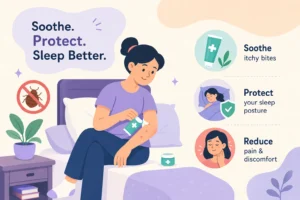
 Most people focus on the bites themselves: the itch, the bumps, the panic. But bed bug bites do more damage than they get credit for. The bites are the obvious part. What most people miss is everything that follows, the nights you can’t stop scratching, the sleep you lose, the stiff neck you wake up with, and the dull headache that trails you through the next day.
Sleep disruption from ongoing itching is a real physical stressor, and your body compensates in ways that quietly wreck your back and neck over time. Poor sleep raises your pain sensitivity, tightens your muscles, and locks you into uncomfortable positions you don’t even notice until morning. This article gives you what you actually need: how to confirm you’re dealing with bed bug bites, how to relieve symptoms without making things worse, and how to protect your body through the recovery. For anyone whose sleep-related pain has already settled in, Find Chiropractic makes it easy to find a local specialist who can help.
How to recognize bed bug bites and tell them apart from other bites
What bed bug bite symptoms actually look like across skin tones
Bed bug bites show up as small, raised, itchy bumps, often in clusters or a zigzag line on skin that was exposed during sleep. Arms, neck, shoulders, and back are the most common spots. On lighter skin, they appear pink or red, sometimes with a darker center or a pale halo around the bump. On medium-to-dark skin, the marks often look violet, brown, grayish, or close to the person’s natural skin tone, which makes them far easier to miss.
Reactions vary widely. Some people develop dramatic hives or blisters. Others show no visible mark at all. Bed bug bites can also take up to 14 days to appear after initial exposure, so you may feel fine for almost two weeks and then suddenly develop a rash that seems to come from nowhere. One important point: appearance alone can’t confirm bed bugs. You need physical evidence in the room to be sure.
Bed bug vs. mosquito, flea, and spider bites
The pattern matters more than the individual bite. Bed bugs leave repeated lines or clusters in areas where skin touched the mattress or bedding. Mosquitoes leave scattered, isolated bumps on exposed skin, usually just a few at a time, with no defined pattern. Flea bites are small, intensely itchy, and clustered around the ankles and lower legs, often tied to pets or carpet exposure. Spider bites are typically a single lesion rather than a cluster, sometimes with two puncture marks, and they tend to become increasingly painful or discolored over time.
These are clues, not diagnoses. Bed bug bites can look like all of the above, and a skin reaction alone won’t settle the question. The room tells you more than the rash does.
How bed bug bites silently wear down your back and neck
The sleep disruption chain reaction
This is the part most people don’t connect. Constant itching fragments sleep and reduces restorative sleep stages. Even a few nights of disrupted sleep can increase your body’s sensitivity to pain, and ongoing disruption compounds that effect. Poor sleep also increases fatigue, physical stress, and pain sensitivity, which means existing back or neck pain intensifies and new tension builds faster. By one to two weeks in, persistent pain may be amplified not just by the bites themselves, but by a body that has been unable to fully recover overnight.
Fatigue also changes how you move during the day. You slouch more, your posture collapses at your desk, and your muscles do a worse job stabilizing your spine. The bed bug bite started the problem. The sleep loss keeps it going.
Protective posturing, muscle tension, and headaches
When something hurts or itches, the body guards it. You shift how you lie in bed, favor one side, bunch your shoulders, or curl away from the bite sites without realizing it. These compensatory postures load the cervical spine and lumbar muscles in ways they weren’t designed to hold for eight hours straight.
The result: you wake up with a stiff neck, tight shoulders, or a low-grade headache that feels completely unrelated to the bites. It’s not unrelated. It’s cause and effect, just delayed. Sustained muscle contraction during sleep creates trigger-point-like soreness by morning, and if the pattern repeats night after night, that soreness stops being temporary.
How to treat bed bug bites at home without making things worse
The treatments that actually reduce itch and protect skin
Start with the basics that are clinically supported. Wash the affected area gently with soap and water, then pat it dry. Apply 1% hydrocortisone cream thinly to itchy bed bug bites, following the package directions. Calamine lotion is a solid alternative if you prefer something without a steroid. For swelling, a cool compress or a wrapped ice pack applied for 10 to 15 minutes at a time works well without any risk of additional irritation.
For a widespread bed bug rash, a colloidal oatmeal bath gives meaningful relief without aggravating already-inflamed skin. Keep your fingernails short and clean. Scratching is the main route to secondary infection, and broken skin from scratching turns a manageable situation into one that needs a doctor.
Managing itch at night so sleep has a chance
Oral antihistamines are where you get the most leverage after dark. Non-sedating options such as loratadine or fexofenadine are generally preferred during the day when you need to stay alert. Cetirizine is less sedating than diphenhydramine for many people but may still cause drowsiness in some. Diphenhydramine is the better option at night if the drowsiness is acceptable to you, since it both reduces the histamine response and helps you fall back to sleep. Getting ahead of the itch before symptoms worsen, using antihistamines and topical treatments before bed, is the most effective way to actually sleep through the night.
One firm rule: don’t reach for topical or oral antibiotics on intact bites. They’re reserved for confirmed secondary infections. Using them preemptively doesn’t help and invites resistance with no real benefit. The goal is reducing inflammation, not treating an infection that hasn’t started.
Red flags that mean it’s time to see a doctor
Signs that infection has set in
Watch for spreading redness beyond the bite site, increasing warmth or tenderness, pus or discharge, open sores from repeated scratching, or a low-grade fever. Red streaks moving away from the bite are an urgent sign and shouldn’t be monitored at home.
Secondary bacterial infections, commonly caused by skin flora such as Staphylococcus species, may respond to prompt antibiotic treatment, but prompt is the operative word. Don’t wait it out once these signs appear.
When allergic reaction crosses into emergency territory
Serious allergic reactions to bed bug bites are rare, but they happen. Trouble breathing, swelling of the tongue or throat, widespread hives, dizziness, or fainting are not symptoms to observe at home. These are signs of anaphylaxis. Call 911 immediately. Clinicians may use epinephrine, systemic corticosteroids, and IV antihistamines to treat a reaction at this level.
For severe but non-emergency reactions, a clinician will typically prescribe stronger topical corticosteroids or systemic antihistamines. The threshold for calling a doctor is lower than most people assume. If you’re questioning whether it’s bad enough, it probably is.
Protecting your sleep posture and reducing pain during recovery
Sleep positioning while bed bug bites heal
The goal is neutral spinal alignment even when itching makes every position uncomfortable. Avoid lying directly on bite sites. Use a firm, supportive pillow that keeps your neck level with your spine, not cranked up or dropped down. Side sleepers should place a pillow between their knees to keep the hips aligned and prevent the upper leg from pulling the pelvis forward and twisting the lower back. Back sleepers benefit from a pillow under the knees to reduce lumbar strain.
These aren’t complicated adjustments. But they prevent the compensatory posturing that snowballs into real musculoskeletal pain over several nights of bad sleep. Small corrections made consistently matter more than the perfect setup made once.
When the pain needs more than rest: finding local chiropractic care
If neck stiffness, back tension, or headaches have lingered for more than a week after disrupted sleep, they may not resolve on their own. A clinician, whether a physician, physical therapist, or chiropractor, can evaluate postural shifts and spinal tension that developed during the disruption and offer targeted guidance rather than generic rest advice. If red flag symptoms are present, see a medical clinician first. For posture-related pain and recovery, Find Chiropractic is a practical way to search for local chiropractors who specialize in sleep-related pain and posture correction.
At your first visit, tell your provider exactly what happened: how long your sleep was disrupted, where you feel tension, and whether you noticed yourself lying differently or guarding certain areas at night. That context helps your provider zero in on what actually needs attention instead of treating you like a standard back-pain case.
How to check your home for bed bugs
What to look for and where to look
Don’t limit the search to the mattress surface. Use a flashlight and check mattress seams and piping, the box spring’s edges and underside, headboard joints, bed frame crevices, nightstand surfaces and drawers, baseboards near the bed, and any upholstered furniture nearby. You’re looking for four specific signs:
- Rusty or reddish blood smears on sheets or the mattress
- Tiny dark-brown fecal spots that may bleed slightly if dampened
- Pale, translucent shed skins shaped like small bugs tucked into seams
- Cream-colored eggs roughly 1mm long in crevices and piping
Multiple signs clustered in the same area are more conclusive than one isolated stain. A fecal spot by itself might mean nothing. A fecal spot next to shed skins and blood smears means you have a problem worth acting on.
What to do after you find evidence
Finding one sign is a reason to keep looking. Finding several is a reason to call a licensed pest control professional. DIY treatments rarely eliminate a full infestation, and continued exposure means continued sleep disruption, which means continued pain. This is not the place to experiment with sprays from the hardware store and hope for the best. Move fast, bring in a professional, and remove yourself from the exposure while treatment happens.
The bites fade. The body effects don’t have to linger.
Bed bug bites aren’t just a skin problem. They trigger a chain of effects: broken sleep, increased pain sensitivity, guarded postures, and real musculoskeletal pain that can stick around long after the bites themselves are gone. The fix isn’t complicated, but it does require addressing each piece, identify bed bug bites early, treat them with what actually works, check your home thoroughly, and don’t ignore the body signals that show up after a week of poor rest.
Back pain, neck tension, and persistent headaches that follow sleep disruption aren’t something to push through and wait out. A qualified clinician, chiropractor, physical therapist, or physician, can help with posture and recovery and make a genuine difference in how fast your body gets back to baseline. Find Chiropractic is a practical starting point for finding someone local who handles exactly that kind of recovery care.
Take care of the bites. Then take care of the body that spent a week fighting to sleep through them.